
MIO: Memories in Orbit Review

Introduction
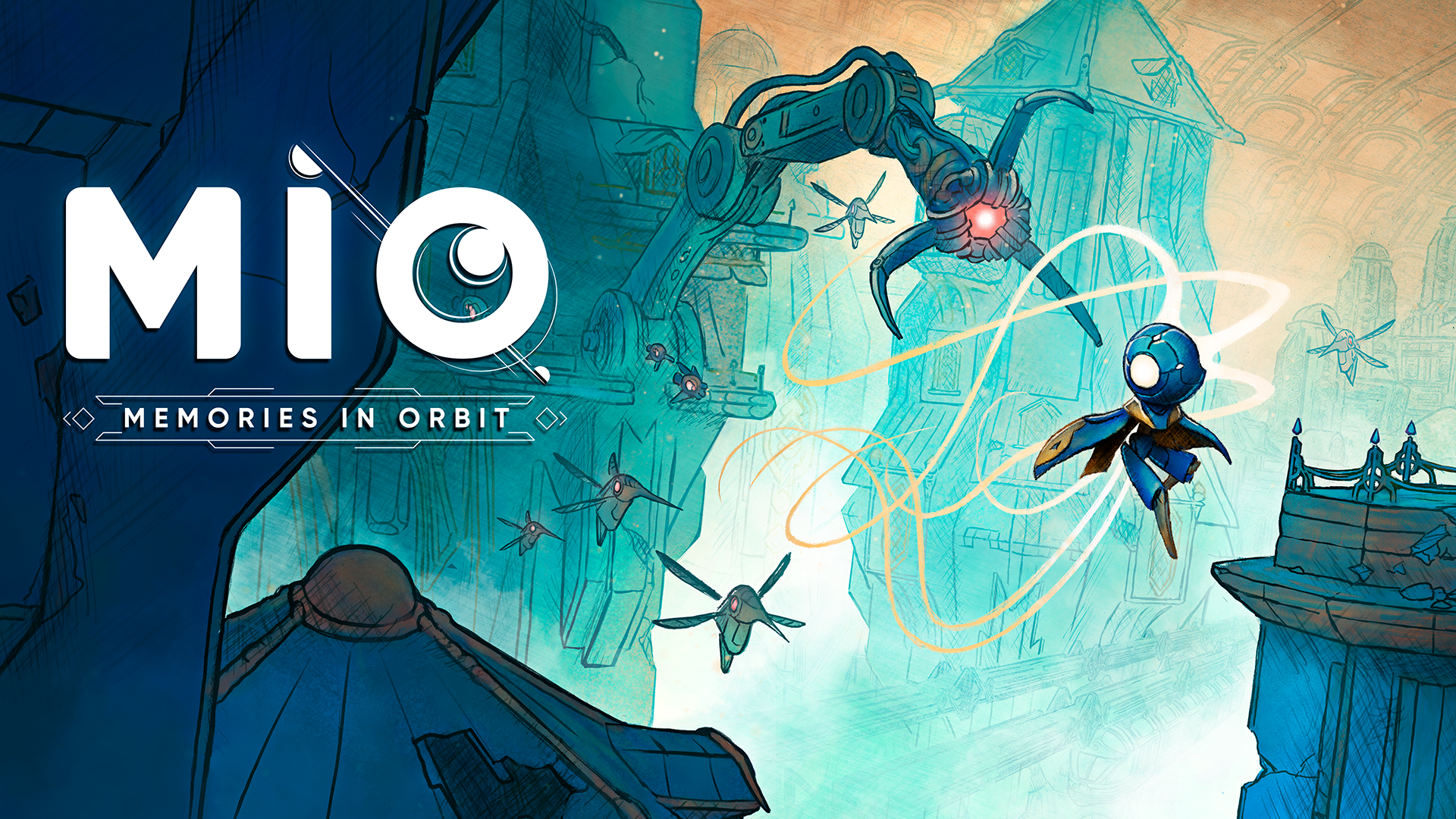
MIO: Memories in Orbit is a 2.5D metroidvania platformer by the now closed down French indie studio, Douze Dixièmes. You'll wake up on the vessel, a spaceship with a large variety of ecosystems, as Mio. You come to find the world around you in complete disarray, requiring you to journey throughout the vessel, recovering "pearls" in order to save the heart of the ship.
I'll attempt to break down the aspects of the game into individual categories and assign a score out of 100 based on certain entirely subjective criteria. The criteria I'll base my score on can be found here.
Spoiler warning
While I try my best not to spoil puzzle solutions or other major parts of the story/gameplay loop, it is hard to write an in-depth review without doing so to some extent. If you have not played the game and do not wish to have aspects of the game revealed to you ahead of time, do not read this review.
Gameplay
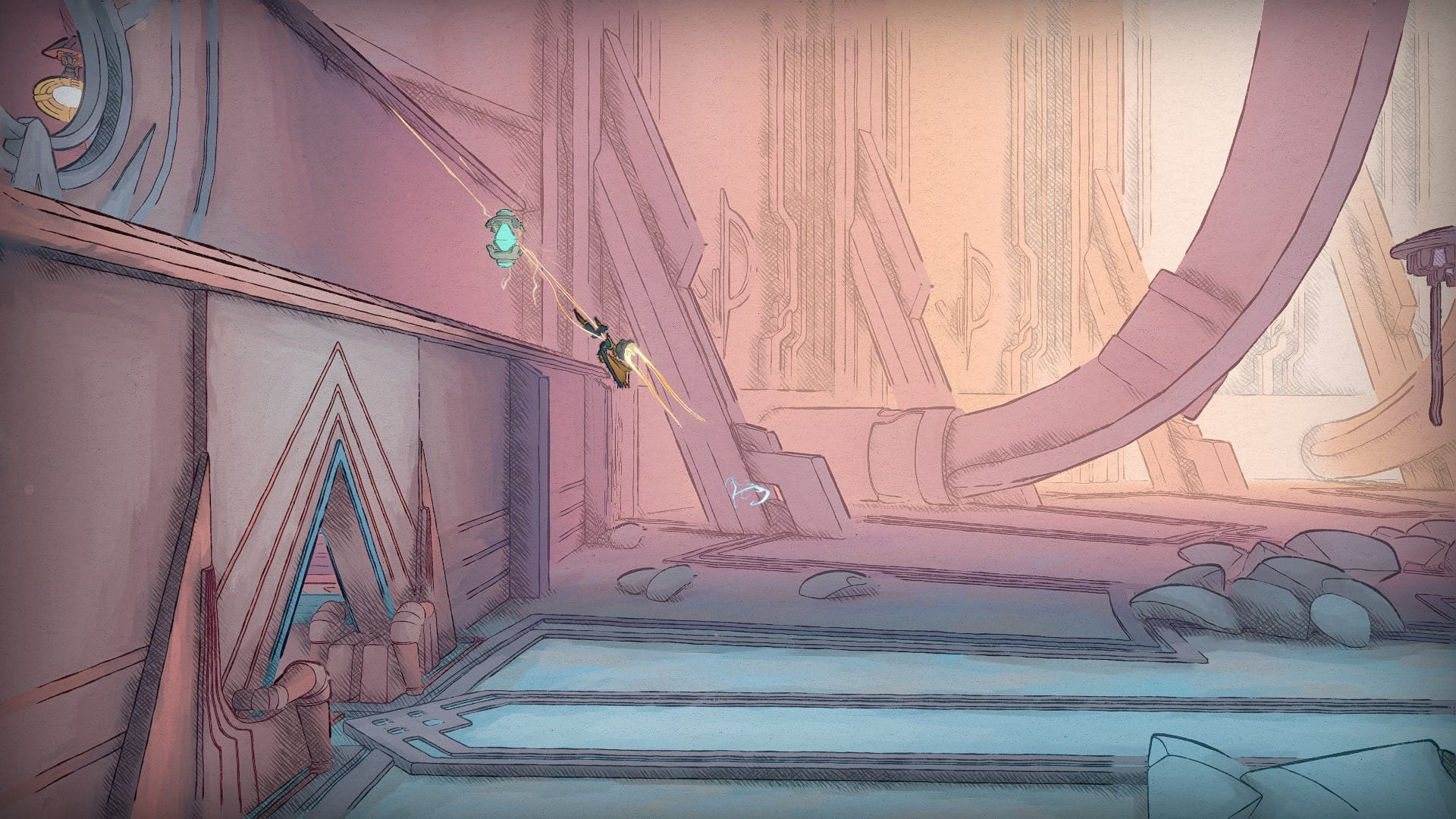
MIO is a true metroidvania in every sense. The game gives you a tightly interwoven world to play with as you fight your way through various challenges to acquire new abilities. Much like other metroidvania titles, there is no explicit linear path most of the time. You'll generally have an idea of where to go next, but there's almost always something else you could be doing at the same time to progress and grow stronger.
In addition to the metroidvania type abilities that give you access to new areas, you can also adjust Mio's modifiers, much like the charm system in Hollow Knight. I personally found this system to be quite enjoyable as the tradeoffs you make when deciding your modifier slots are always interesting (for example, you can turn off your HUD, including your health, to save 5 modifier slots). One of my favorite parts of Hollow Knight was creating boss specific builds, which is why I think I've fallen in love with the systems that MIO uses as well.
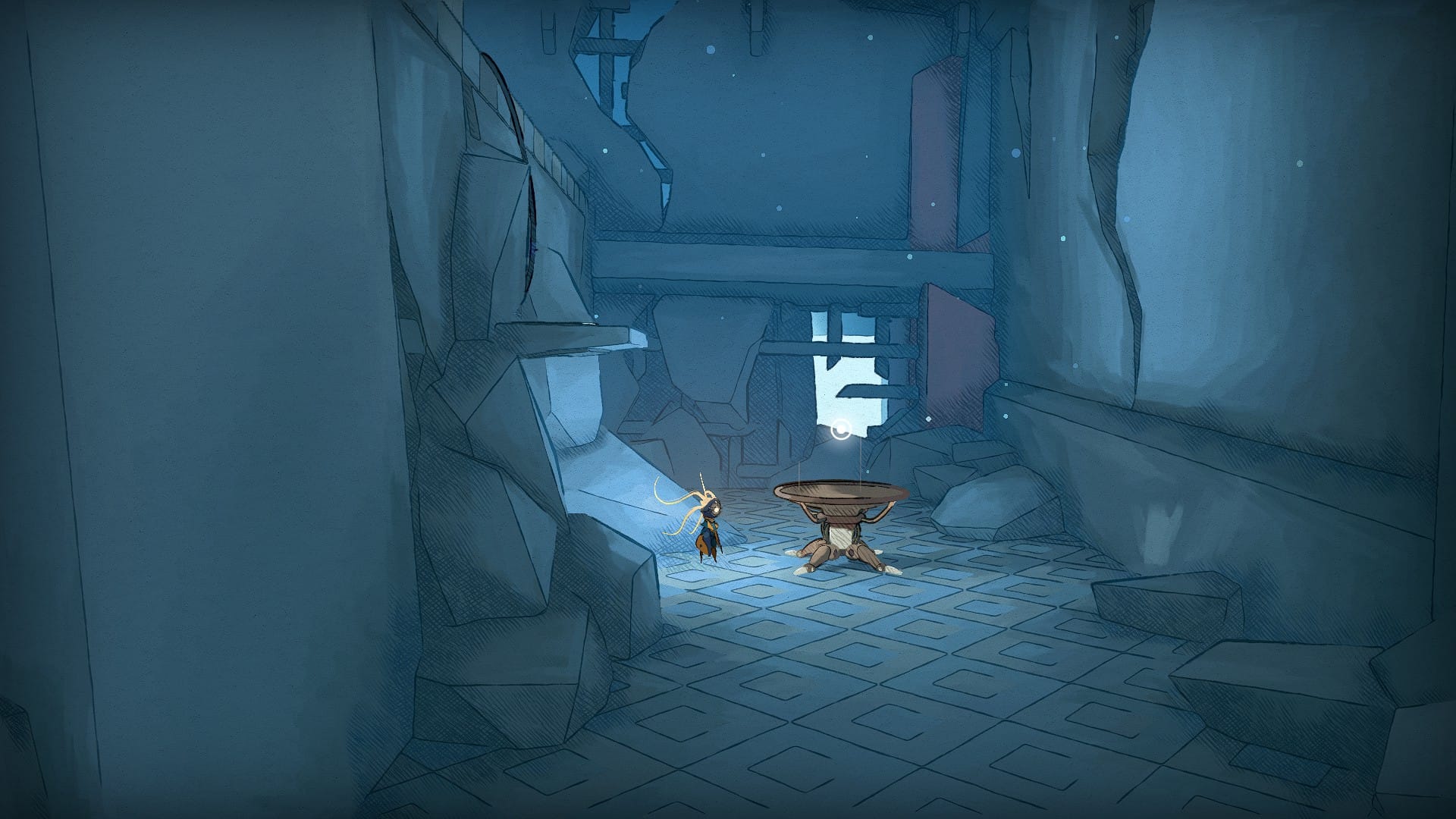
It would be unfair if I didn't go into the biggest gameplay shortcoming, the absolutely brutal health system. There are 3 ways to heal, either refill your health by spending nacre at a nacre basin, return to an attuner checkpoint, or use a modifier that allows for regeneration of your health (these are limited to specific conditions, each only granting at most 1 possible recovered health). This is incredibly restrictive, especially for boss fights as you cannot really heal in the middle of one. On top of this already restrictive system, there are points in the game where for story/lore related reasons you will PERMANENTLY LOSE HEALTH. FOREVER. I get why it makes sense for the story, but it's incredibly frustrating to somehow get weaker over time in a metroidvania style game.
Gameplay Score: 17/20
Design
The visual design in MIO is absolutely stunning. The entire world is crafted with hand-drawn cel shaded elements that are fully modeled 3D objects that you can observe by panning your camera around. The color palette is incredibly vibrant for most areas. Given the mechanical/robotic theming of the game you might think this would be a misguided decision, but the bright colors worked incredibly well and never really distracted from the theme.
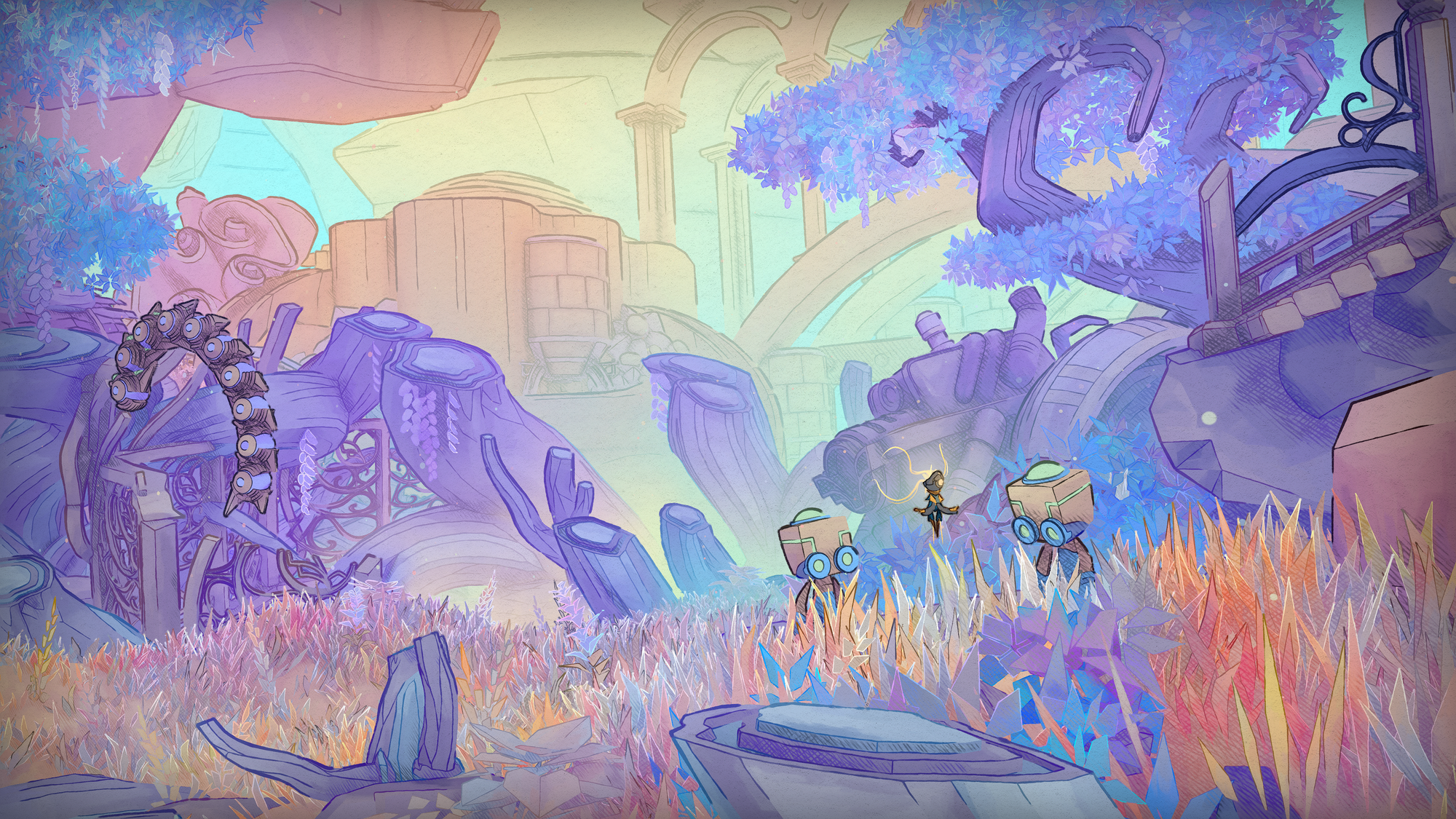
I have to give credit where credit is due, for such a relatively small map, there is a wide variety of environments to explore, each with their own distinct visual style. From the beautiful gardens of Haven, to the icy coldness of Metropolis, each area has its own unique visual identity and personality. On top of this, there are no loading zones (none that are easily noticeable by the player at least), each area flows openly into the next, making the visual design and layout so much more challenging to pull off as successfully as MIO did.
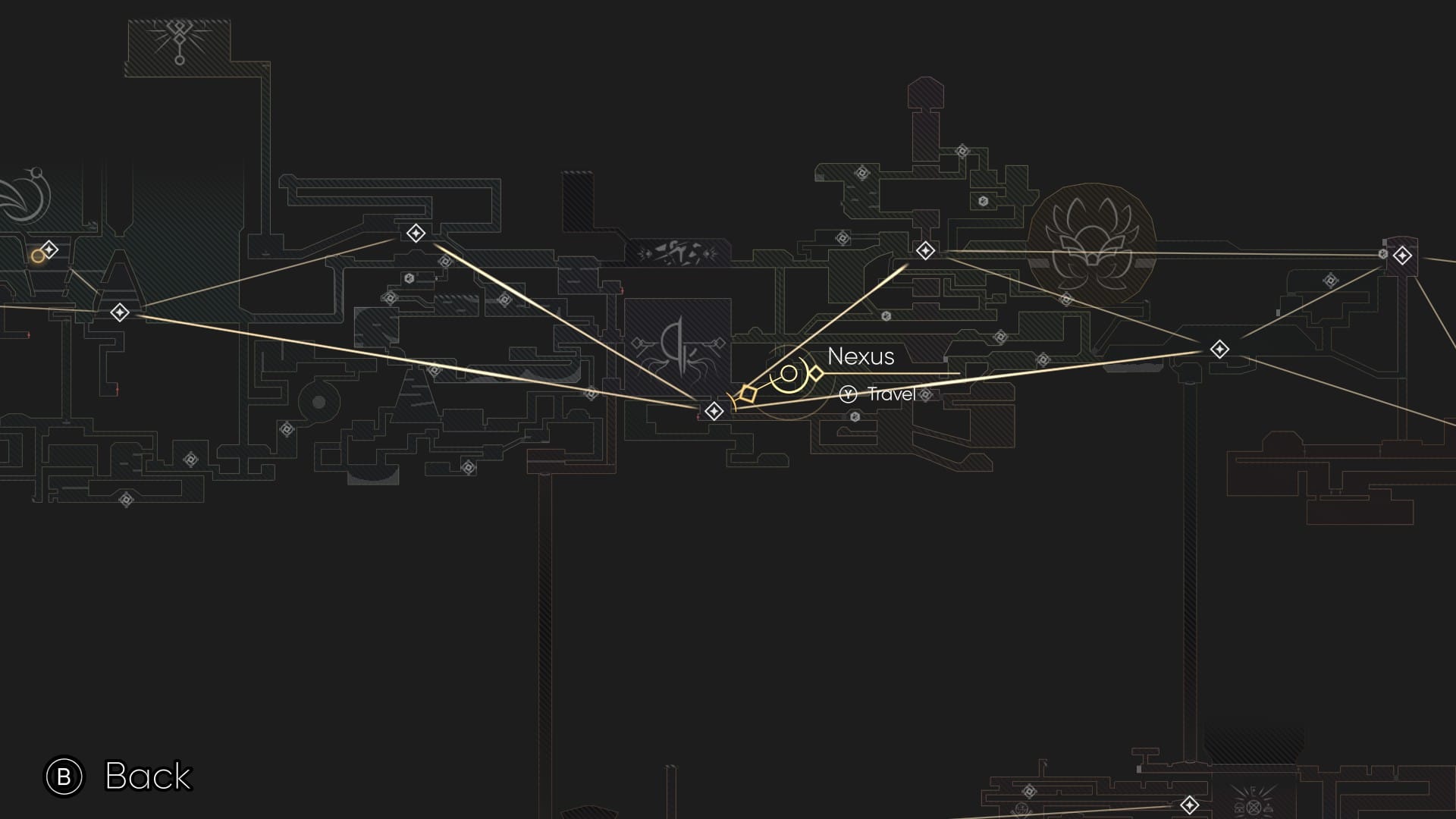
Something that bothered me quite a bit during my playthrough, and especially towards the start of the game, is the overall lack of checkpoints. I don't think I got access to a checkpoint besides the initial spawn until after killing 3-4 bosses. On one hand, this forces players to explore and find shortcuts to make getting back to where they were after dying easier. On the other hand, this made several sections really suck due to how much time you'll spend just running across a dozen rooms just to get back to where you need to be.
Design Score: 16/20
Music
I absolutely loved the music in MIO. The soundtrack was done by French composer Nicolas Gueguen and consists of over 3 hours of stunningly beautiful orchestral tracks, gritty and robotic boss music, and unique area ambience. I think that in shorter runtime games like this, it's very easy to miss when it comes to the soundtrack, but the soundtrack here is both enjoyable and highly memorable.
Music Score: 10/10
Lore
There are two ways in which MIO tells its story, the surface level information given directly to the player by NPCs like Shii, and information that the player can discover through lore items around the map that really expands on the why behind everything going on within the vessel. I think handling lore like this for games that have a more openly explorable world is great as it allows people who do not care about the story as much to simply enjoy the game for the gameplay. By doing this it also leaves the door open for people who enjoy learning the deeper stories of games, like myself, to both explore the game world and uncover details intentionally, which really makes the game feel just much more detailed.
Lore Score: 10/10
Controls
NOTE: I played this game with gamepad controls, and the following is based on that.
I was very pleasantly surprised by the control scheme in MIO. It's incredibly easy to create a set of controls in a platformer game that can really just ruin the experience due to clunkiness in movement abilities or poor ability mapping. Combat felt incredibly fluid and responsive with the default gamepad controls, as did platforming.
Control Score: 10/10
Difficulty
The difficulty in MIO falls in line with titles like Hollow Knight: Silksong in the sense that you will almost always have to fight a boss multiple times in order to progress. I personally enjoy games that require slowly learning how to play a boss fight over the course of multiple failures and I think that MIO executes this style of difficulty incredibly well.
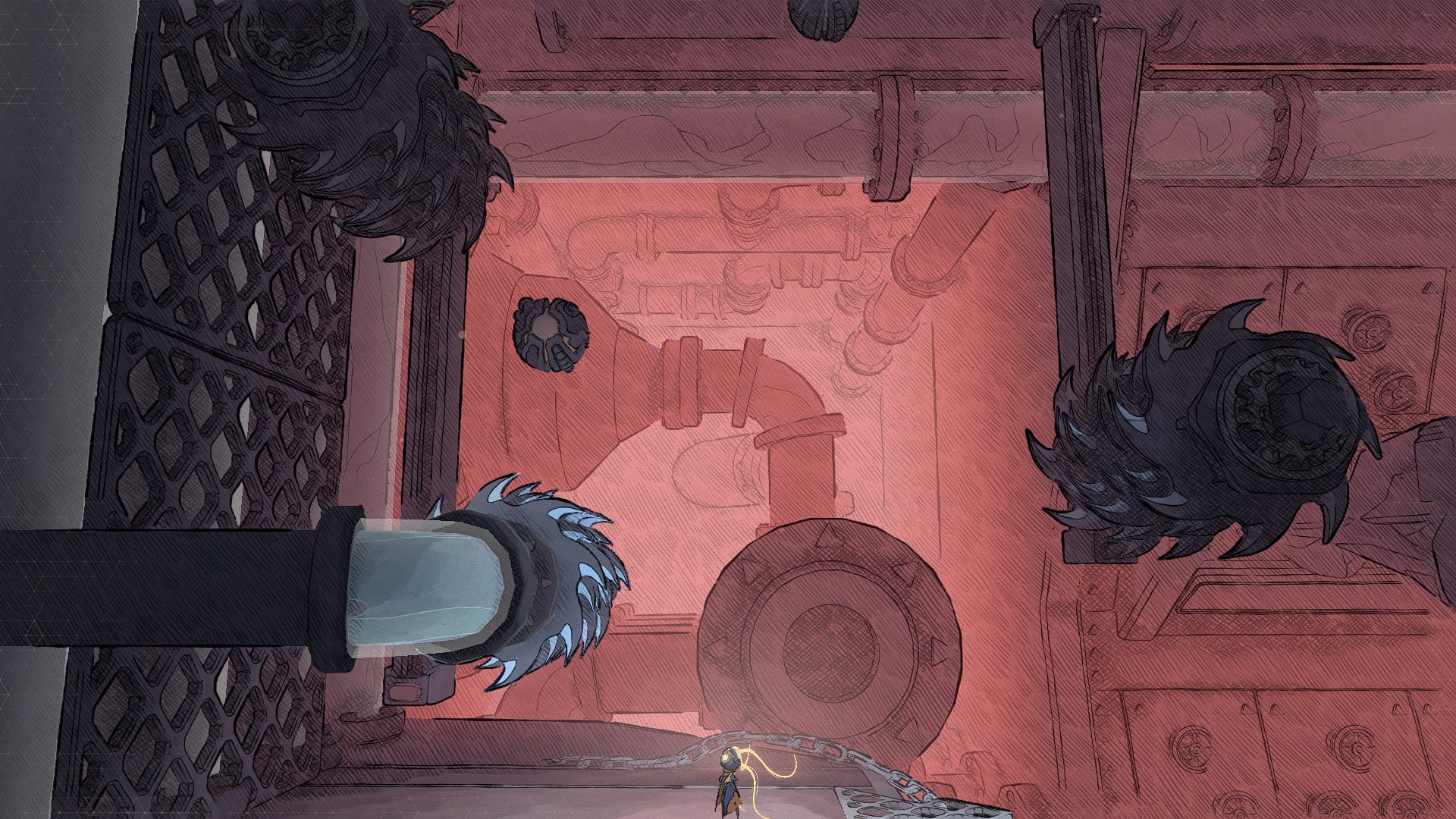
The unfortunate side effect of adopting a Silksong-esque difficulty is encountering some of the same frustrations that detract from the overall experience. In this case, it's the lack of ability to heal efficiently without going all the way back to an attuner. With some of the more difficult platforming sections specifically, they are often not positioned right next to attuners. This then requires either incredible precision to complete some of the more difficult platforming sections or incredible patience because the run-backs can be absolutely brutal.
Difficulty Score: 8/10
Overall Quality
I think that MIO really hit the mark when it comes to crafting a high-quality experience. Throughout my playthrough I'm pleased to say that I did not encounter any sort of noticeable bugs. The game is seemingly well optimized with minimal clutter and easily adjustable settings.
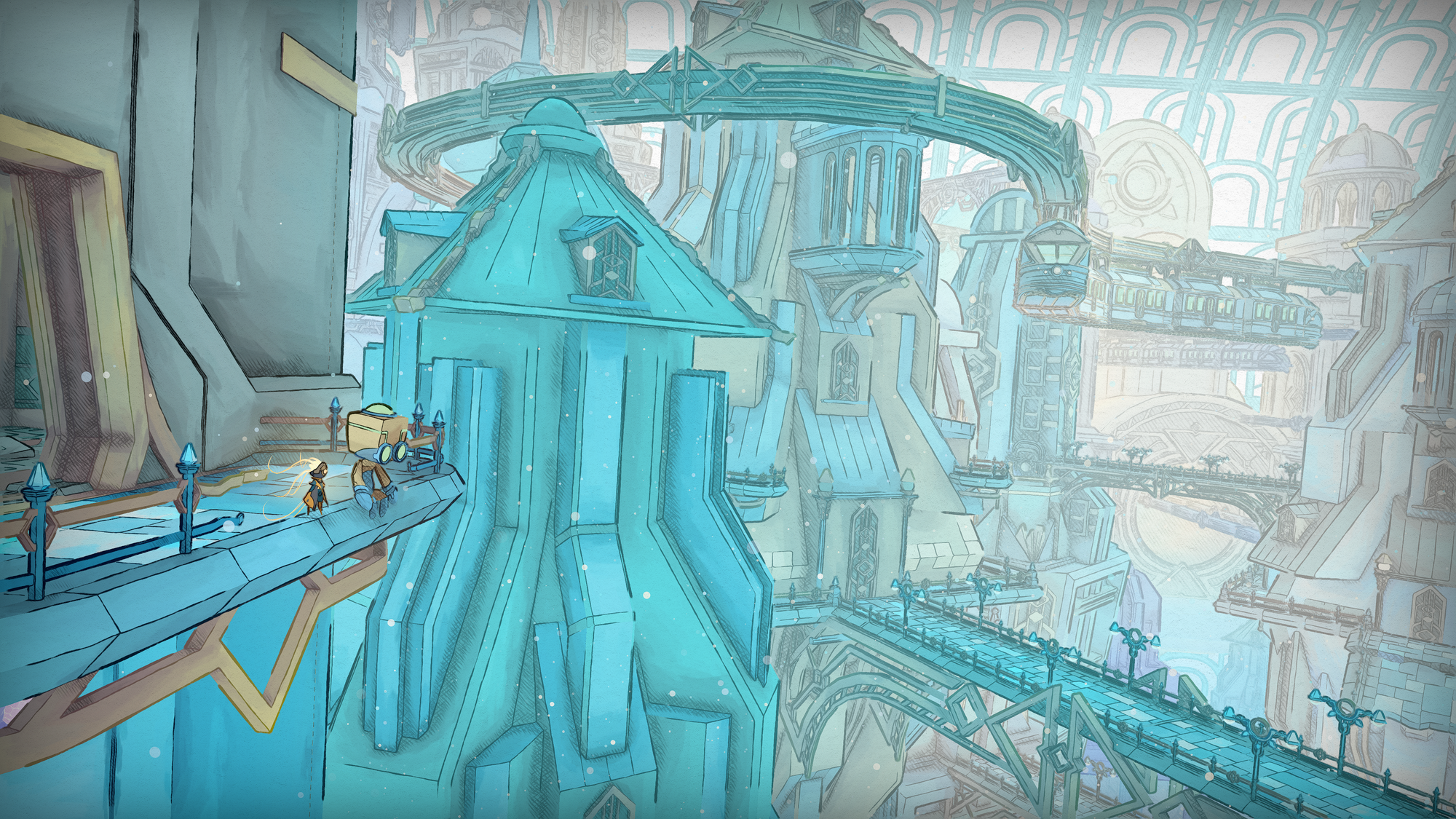
In addition to the game being effectively bug-free, there is simply so much to do relative to the length of the main game. In addition to the ending that the game guides you towards naturally, you can choose to take the time on your own to explore and fight optional bosses, do optional side objectives, and potentially discover additional endings if you dig deep enough. The entertaining aspects of the game are not limited to the main story which makes the whole game feel just much more well rounded.
OQ Score: 20/20
Final Thoughts
MIO: Memories in Orbit was a thoroughly enjoyable experience. The world was so incredibly captivating that I found it hard to put the game down at times. At an average completion time of around 15 hours, you'll keep yourself busy enjoying all the world has to offer at a price point that undersells the game's value at $19.99 USD. If you enjoy modern metroidvania games as much as I do, picking up a copy of MIO is an absolute must.
Overall Score: 91/100
All images used in this article were sourced either from the Steam Store, press kits, or personal screenshots taken from the game.
Review #008